Ohio Valley Parent article April 2007
WLSC SMART-Center
Feel the Wind
Spring is a great time to experience nature's energy sources. One of these natural sources of energy
is the wonderful sunlight and another is the wind. On a warm spring day you can watch the leaves on trees blow
in the wind and the flowers sway back and forth. The same wind that can cause these movements and even
mess up your hair can also be used to generate electricity.
Several places in the United States depend on wind power for
generating electricity that provides light and heat to many homes. Can you imagine a day without
electricity? It would certainly be
much different! To find out more
about how wind can generate electricity, check out
www.smartcenter.org/ovpm/wind
In West Virginia a wind farm (collection of wind mills—BIG
ones) has been developed in Tucker County . Some of these windmills are over 300 feet (almost 100
meters) tall.
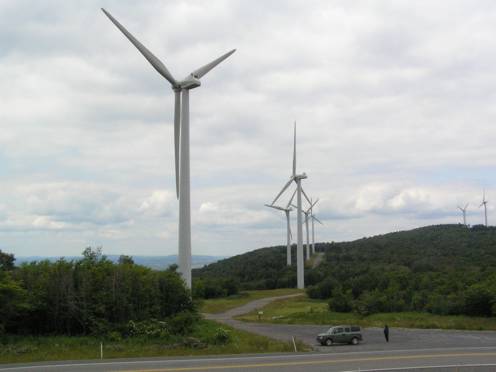
Notice how small a person and a car look near the windmills! These really big windmills use their
size to their advantage. They can
“catch” much more wind with their large blades and use this energy to spin a
shaft inside that connects to a generator. This generator will send the electricity through lines to a
substation and then on to help light and heat homes, cook food, and provide
power for your TV and computer.
What other things in your home need electricity to work?
These windmills do not need oil, coal, or other fuels to produce
electricity. They use the energy
of the wind.
Wind powered Toys
How many kinds of toys can you think of that can use the wind to
move them? Blowing bubbles
is a fun activity to watch which way the wind is blowing. Kites are another type of toy
that uses the power of the wind.
If you have a good idea for a toy that uses wind power, e-mail us your
idea at
strongli@westliberty.edu
Second Annual West Virginia Kite Festival
The warm breezes of spring are perfect for flying kites. The forces that make a kite fly
are fun to investigate while you are getting fresh air and exercise.
If you would like to fly your favorite kite with other people who
enjoy using the power of the wind, join us at the Second Annual West Virginia
Kite Festival at Brooke Hills Park Cardinal Shelter on April 28 from 1 p.m.
until dusk. The festival is
funded in part through a grant from the NASA West Virginia Space Grant
Consortium titled “One Year of Space and Sky”. The first 100 children will
receive a free kite to fly at the event and then take home to enjoy. If you have a kite of your own,
please bring it with you.
Some students have built kites of their own that are wonderful for
flying (and some are really colorful).
Other events at the kite festival include an Arts and Crafts Fair,
music, food, and other fun activities for the whole family.
Please check out
www.smartcenter.org/ovpm/kites
for more information.
National Astronomy Day
This year National Astronomy Day is April 21 st. This is also Near Earth
Day—a day to learn about Near Earth Objects. The West Liberty State College SMART-Center, ASTROLABE
astronomy club, Near Earth Object Foundation, and Brooke Hills Park sponsor the
event. For additional
information about National Astronomy Day and the 2007 poster contest, visit
www.smartcenter.org
Robert E. Strong is the director of the West Liberty State College SMART-Center, the hands-on science center of the Northern Ohio Valley. Libby Strong is the Program Coordinator at the West Liberty State College SMART-Center and also directs the WV-Handle On Science Program that brings hands-on science kits to the public school classrooms of the Northern Panhandle. Richard Pollack is the assistant program coordinator, webmaster, and technology specialist for the WLSC SMART-Center. Robert, Libby, and Richard invite you to visit the website at www.smartcenter.org