SMART Science Article
Ohio Valley Parent Magazine July 2006 issue
PLAYGROUND PHYSICS
There are many ways to learn how things move, balance, slip, and slide at your neighborhood playground. This “playground physics” may be the most fun physics of all! Try these outdoor physics activities soon at your nearby playground.
Just A Swingin’
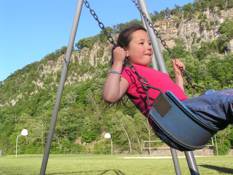
Playground swings make you feel like you’re flying. You aren’t really flying, of course, but you are able to swing pretty high. How does your swinging change when your big brother or your mom pushes you? What happens if you pump your legs back and forth? Why do you think this happens? How does this compare with no pushes or legs pumping? Visit www.smartcenter.org/ovpm/swings for more information.
Slip Slidin’ Away
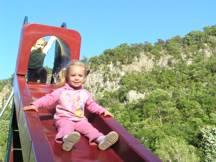
Did you know that a playground slide is a type of simple machine called an inclined plane? Inclined planes can help make work easier, and they sure make sliding fun! To learn more about simple machines, visit www.smartcenter.org/ovpm/simplemachines
To try this activity (adapted from Science in Seconds with Toys by Jean Potter) you will need:
§ A playground or backyard slide
§ Waxed paper
1) Slide down the slide as you usually do and notice how fast and easily you slide. Try this several times. Each time is what we call a trial. Good experiments do at least three trials.
2) What do you think will happen if you changed what you are sliding on? Tear some waxed paper (large enough to sit on) from the roll and place it between you and the slide.
3) Hold the waxed paper at the sides and then slide down the slide again. Try this at least three times.
What happens? Why do you think you think this happened? Visit www.smartcenter.org/ovpm/sliding to find out more about changing surfaces that objects slide on and how this affects sliding.
More Cool Playground Physics
Seesaws and merry-go-rounds are two other examples of playground equipment that help you experience “playground physics”. Seesaws are levers that you can experiment with by changing the size of the person on the other side of the seesaw or changing where you sit. Can you think of other things to change? Merry-go-rounds demonstrate forces when things move in a circular path. To learn more, visit www.smartcenter.org/ovpm/playgroundphysics
What’s Up?
The WLSC SMART-Center will continue its series titled “The Solar System: Inside and Out” this month on July 19th on the second floor of the WLSC Warwood Center. The topic will be Venus. The presentation begins at 7:00 p.m. and is sponsored in part by the NASA WV Space Grant Consortium. Activities will be appropriate for all ages.
On July 21st the third in a series of NASA WV Space Grant Consortium funded Starwatches will be held at Brooke Hills Park Cardinal Shelter beginning at dusk. Bring the whole family for a great night of enjoying the sky together. Telescopes and knowledgeable amateur astronomers will be on hand to showcase the wonders of the evening sky. For more information about these and other upcoming events and astronomy-related activities, visit www.smartcenter.org/whatsup/