By the Light of the Silvery Moon
Favorite World
What is your favorite world in the Solar System? Some people say the Earth is their favorite world. The Earth is the home to everyone that has ever lived. The Earth is the home for humanity. It has liquid water – an important ingredient for life, an oxygen rich atmosphere, and is not too hot and not too cold. As Goldilocks would say, the Earth “is just right”. There are many other worlds in our Solar System, some small, some large, some hot, and some cold. Some have no atmosphere and others have very thick atmospheres. Our Earth is the only world we know of that you do not need a space suit to live. A space suit is a sealed suit that has the right kind of air to breathe and keeps you at the right temperature so that you do not freeze or cook. Every other world in the Solar System is not “just right” for humans like you and me. Every other world is dangerous without a space suit.
The closest other world to the Earth is the Moon. In the 1960s and early 1970s astronauts in space suits inside huge Apollo rockets traveled to the Moon. Some of the people orbited the Moon to study it and their equipment for landing on its surface. Other Apollo space missions landed safely on the surface of the Moon. Astronauts then performed experiments, gathered soil and rock samples, took lots of pictures, and after a few hours or days were able to come back to the Earth safely. Visit our website at www.smartcenter.org/ovpm/moonimages to see some of our favorite NASA images of the Moon and some Moon images taken by SMART-Center staff.
Living on the Moon
So far, only 12 humans have ever set foot on the Moon. The only other world humans have ever visited. NASA plans to return humans to the Moon by 2018. Just think, in twelve years, you may be one of the next people to travel to the Moon. This time humans will go to the Moon to learn to live there. What do you think you would need to live on the Moon for a year or more? What do you think are the 10 most important things you would need to not only survive but to be comfortable? What would your idea of a “Moon Base” look like? How would you design it? Discuss this with your friends and family. We at the SMART-Center would like to hear what you think. You can e-mail us your ideas and images to robert@smartcenter.org or send your ideas to :
Moon Base Ideas
WLSC SMART-Center
1610 Warwood Avenue
Wheeling, WV 26003
We would like to comment on what you think in a later article and put some of our favorite Moon Base ideas and images on our website.
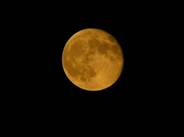
(IMAGE of Full Moon)
Make A Moon Phase Journal
As you have noticed, the Moon appears to have different shapes as it travels around the Earth. The Moon does not actually change shape. What we see is the sunlight falling on different areas of the Moon from the viewpoint of the Earth.
After
a month of Moon watching and recording in your Moon Phase Journal, you will
need to check the Moon phases for days and nights when it was cloudy. To see an entire month of Moon Phases,
visit one of our favorite Moon Phase websites at http://stardate.org/nightsky/moon/
To make a Moon Phase Journal you will need the following items:
A: Notebook
B: Pencil or Pen
C: Clear Sky
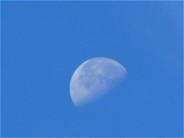
(IMAGE Moon in Day Time)
Procedure for the Moon Phase Journal Activity:
1) Start when ever you can see the Moon (can you really see the Moon in the daytime?).
2) Record the time and place you are.
3) Draw the phase of the Moon that you see and where in the sky you see it.
Other family oriented science related activities
co-sponsored by the SMART-Center
12 part series “The Solar System Inside and Out”
ASTROLABE Astronomy Club meets on the third Wednesday evening of each month at 7:00 p.m. on the Second floor of the Warwood Center at 1610 Warwood Avenue, Wheeling and will host the 12 part monthly series “The Solar System Inside and Out”. The topic for November 15 is Mars the Red Planet – second planet for humanity and will offer hands-on activities appropriate for all age groups. Snacks and refreshments are provided. The series is sponsored in part by the NASA West Virginia Space Grant Consortium. After the meeting, if the sky is clear, a free public StarWatch will be held in front of the Warwood Center.
Radio Science News
If you want to learn more about science, you can tune into “Radio Science News” on WVLY 1370 AM, Saturday mornings from 11:00 a.m. to noon. “Radio Science News” immediately follows the two-hour nature program, “The Wild Side”, hosted by the regional naturalist Dr. Scott Shalaway. Robert E. Strong and Richard Pollack co-host “Radio Science News”, a local radio call-in program with a science theme.
Science in Science Fiction Club:
The “Science in Science Fiction Club” meets on the second Wednesday evening of each month at 6:00 p.m. on the Second floor of the Warwood Center at 1610 Warwood Avenue, Wheeling. Free to the public, snacks and refreshments are provided as we watch and discuss the science in science fiction movies. Check the website www.smartcenter.org for movie titles and information.
What’s Up?
Free Monthly StarWatches at Brooke Hills Park:
Free public StarWatches every third Friday evening of each month at 8:00 p.m. at Brooke Hills Park’s Clubhouse will be led by members of the ASTROLABE Astronomy Club, staff of the WLSC SMART-Center, and the Near Earth Object Foundation.
Telescopes will be provided and the public is also invited to bring their telescopes to the StarWatch events. If the weather does not permit outdoor telescope viewing, the co-presenters will give an astronomy related interactive presentation for the whole family. The StarWatches are sponsored in part by the NASA West Virginia Space Grant Consortium. Please visit www.smartcenter.org/whatsup/ for up-to-date listing of astronomy and other events.
Libby and Robert Strong and Richard Pollack work at the West Liberty State College SMART-Center and invite you to visit the SMART-Center website at www.smartcenter.org